The Blue Line and the Mists of the Ballons
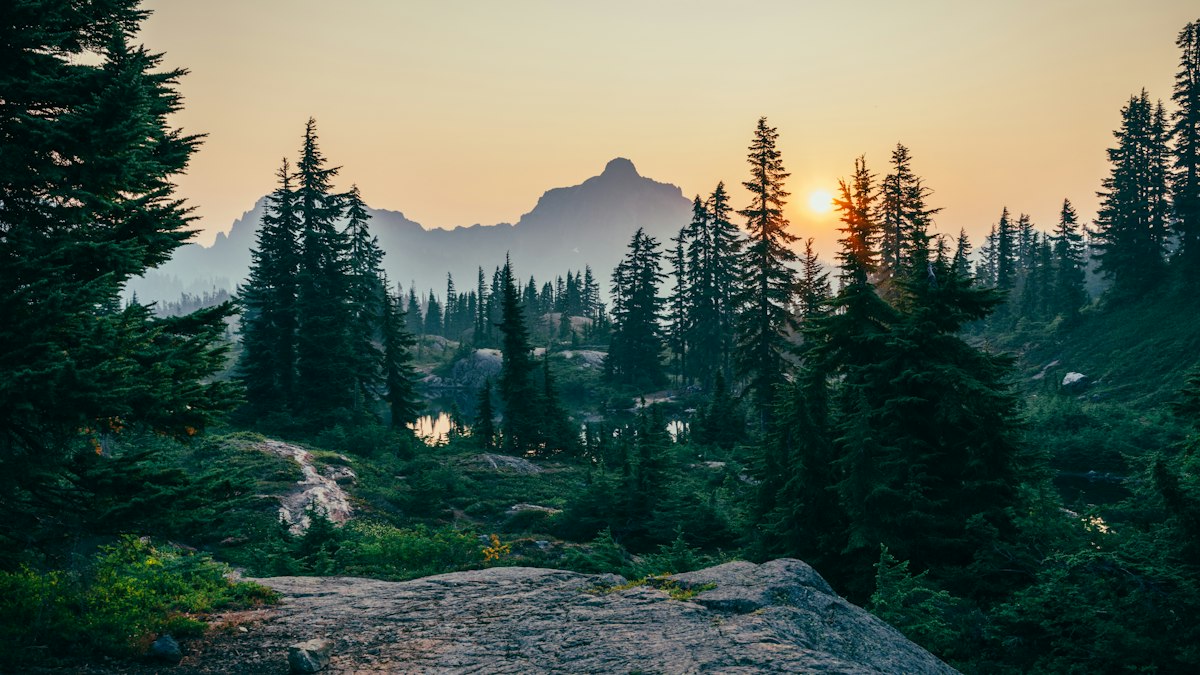
A thick mist rises from the Alsatian valleys, gently licking the wooded slopes of the Vosges. I breathe in the powerful scent of pine resin, magnified by the morning dew pearling on wild ferns. Walking along the line of the Vosges ridges means immersing oneself in the atmosphere of old woodland tales, where rounded summits, called ballons, overlook steep glacial cirques hiding dark green lakes. The light filtered by the canopy creates a hushed, almost mystical ambiance, perfect for contemplation.
As I ascend toward the hautes-chaumes, the landscape abruptly opens up. The whistling of a brisk wind replaces the forest silence. These high-altitude meadows, swept by the elements, offer grand viewpoints over the Rhine plain and, on clear days, the distant profile of the German Black Forest. It is a journey of great visual softness, yet its topography reserves technical rocky surprises that remind us that middle mountains remain wild.
Every step on the worn granite trail brings the walker closer to a rich border history whose vestiges still scatter the ground.
"On the ridge of the ballons, the hiker weaves between the shadow of great forests and the infinite light of Rhenish horizons."
The Trail of Rocks and Schlucht Step by Step
The adventure begins at the Col du Bonhomme, a historic junction point. The first day follows the GR5 trail, passing through dense beech forests to reach the suspended shores of Lac Blanc and Lac Noir, two dark bodies of water encased in high granite cliffs. The second stage is the true feat of courage with the crossing of the mythical Sentier des Roches, a technical route carved directly into the rock face, equipped with footbridges and handrails, requiring constant focus before reaching the Col de la Schlucht.
The third day rises toward the summit of the Hohneck, peaking at 1363 meters. At sunrise, it is not uncommon to spot herds of chamois moving along the steep slopes of the Frankenthal cirque. The trail continues along the bare meadows of the Markstein, offering an airy balcony walk. The crossing ends in style with the ascent of the Grand Ballon, the highest point of the massif, before a long descent through vineyards to the historic town of Thann.
Logbook of the Ridge Hiker
To undertake this Vosges journey, the ideal period extends from May to October, when the high meadows are blooming and free of snow. The critical equipment must absolutely include a high-quality windproof jacket to face the violent air currents of the summits, as well as flexible boots with excellent grip to negotiate the wet rocky sections of the Sentier des Roches.
The bivouac regulations are strict in the massif, particularly within the Parc Naturel Régional des Ballons des Vosges. Light bivouacking is tolerated only from sunset to sunrise, and remains strictly forbidden in biotope protection zones to protect the endangered Capercaillie. As for resupply, the crossing is a delight thanks to the exceptional network of Vosges farm-inns. You can spend the night there and savor the traditional marcaire meal, ensuring light and gourmet logistics.