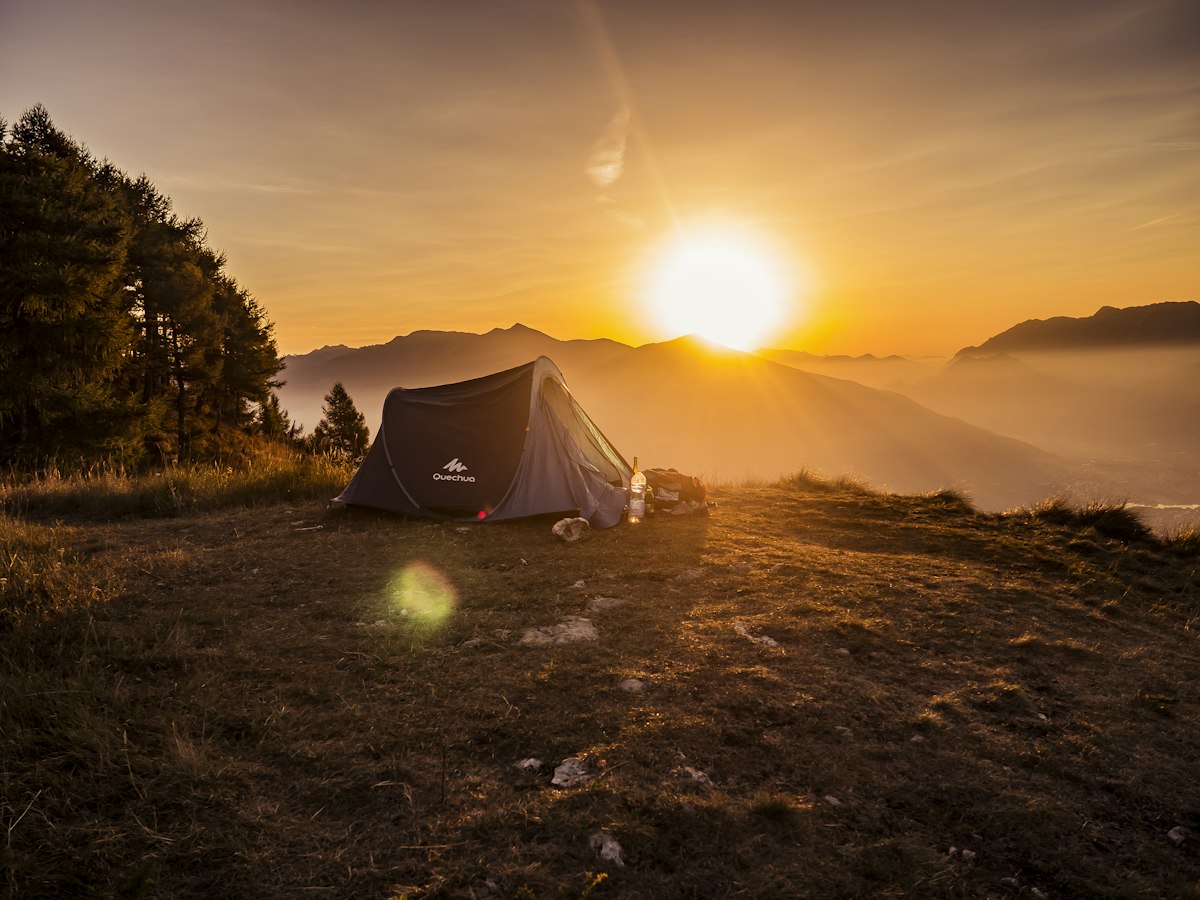
Weight is the hiker's ultimate nemesis. The heavier your pack, the more your eyes stay glued to your boots instead of the landscape. Switching to ultralight backpacking isn't a quest for deprivation; it's a path to liberation. By lowering your base weight below the 5kg mark, you radically transform your relationship with walking.
The holy trinity of weight reduction focuses on the three heaviest items in your gear setup: your **tent**, your **carrying system** (the pack), and your **sleep system**.
### 1. Target the "Big Three" * **The tent:** Replace your traditional double-wall tent with a single-wall trekking pole tent. Average savings: 1kg. * **The sleep system:** Opt for a quilt (a zipperless, hoodless down blanket open at the back) combined with a lightweight, high-insulation sleeping pad. Average savings: 600g. * **The backpack:** A frameless 40 to 50-litre pack is more than enough once your gear is compact. Average savings: 1.2kg.
"Minimalism on the trail isn't about carrying less out of sheer deprivation, but learning how to do more with less."
### Weigh and Sort Without Compromise To successfully make the shift, grab a kitchen scale. Weigh every single item, from your nail clippers to your first-aid kit. Create a spreadsheet or use a dedicated online tool. You will quickly realise that it is not the big items that weigh you down, but the accumulation of small "just in case" extras. The golden rule is simple: if an item doesn't have a vital function or a dual purpose, it stays home.
Remember that the best way to lighten your pack is entirely free: it's acquiring knowledge. The better you can read the weather, purify water, and pitch an efficient shelter, the less heavy gear you need to pack to offset the unexpected.